The Tour Te Waipounamu bikepacking race was held in Aotearoa New Zealand, starting on February 14th 2021, it covered 1300 kilometres of rugged back country.
I suspect it's no coincidence that OPEN make bicycles with model names like OPEN UP and OPEN WIDE. If this is not a clever subliminal marketing attempt at the well-healed "dentist" portion of the bicycle market, then I don't know what is.
Cape Reinga - Te Rerenga Wairua
Leaping place of the spirits
Image: Paul Nicholls
On February the 28th 2018, the last group of riders set off in the Tour Aotearoa, leaving from Cape Reinga, at the tip of the North Island of New Zealand.
1 hour and 10 minutes later, Wellington massage therapist Pat Hogan
reached Bluff, 3000 kilometres away at the bottom of New Zealand, finishing the journey that he
started 14 days earlier on February the 14th at the Cape.
The Tour organiser, Jonathan Kennett had opened it up to 600 riders this year, in 6 x 100
person waves, starting on the 10th of February and staggering the start
waves through until the 28th. This would spread the load over the
country and make sure that the smaller towns were not over-whelmed with
hungry riders looking for a bed. It also made it easier for the Ferries to cope with a more manageable stream of riders.
The Tour Aotearoa is not your typical bikepacking event. It’s not a race, it’s more like an adventure, a journey.
90-mile beach. Photo by Paul Nicholls
A bit of pre-camping before the start. Photo by Paul Nicholls.
It’s like a cross between the Coast to Coast Multisport event and the Camino de Santiago. It encourages self sufficiency and resilience. It must be completed between 10 and 30 days, unsupported, with 6 hours a day minimum rest from riding, for recovery. Riders must follow, and not deviate from an established course that takes in some of New Zealand’s great rides. The Waikato River Trail, the Pureora Timber trail and the Big River Waiuta trails on the west coast of the South Island. Deviation from this path can only be for safety reasons outlined in the course notes, or in cases of civil emergency or local road closings, as happened during Cyclone Gita this year.
Not all plain sailing on the Kaipara Harbour with wild weather causing havoc at times. Image Paul Nicholls.
New Zealand has a very changeable weather system, the literal translation of Aotearoa is “The land of the long white cloud”. After coming off the hottest summer in recorded history this year's Tour Aotearoa was suddenly hammered with rough weather as a series of tropical cyclones swept through.
Some challenging terrain to be negotiated
Not originally a river. Photo: Helen Kettles
Rider resolve was being tested. Ferries were being cancelled, roads were being washed out and closed. Conditions were becoming difficult as cars and heavy traffic were re-routed onto the previously quiet Tour Aotearoa route, causing challenges for some of the riders who were not expecting to mix it up with other road users.
A burgeoning community has grown up around the Tour Aotearoa with many remote accommodation options popping up and sharing their details on the official Facebook site. A Mangakino businessman speculated that the 2016 TA injected $15,000 into the local economy, and he was expecting double that in 2018.
In Ongarue the bowling club was opened for the first time in 20 years where showers and mattresses were set up for riders, as well as a food caravan. In Arapuni the Rhubarb Cafe extended its hours to cope with hungry riders. In Pahiatua a couple of "rest tents" were erected for riders and in Reefton there were welcome banners. All around the country, in the rural areas that the TA passed though, people were getting involved. The upcoming tour was enough to convince a man to open the cafe he had been thinking about at Donnellys Crossing.
Spectators and family members watched as their loved ones navigated the country by keeping an eye on their “Spot-trackers”. The Spot trackers are the thing that has probably done more to promote this kind of an event than anything.
Watching the progress of your friend or family member from the comfort of your computer or cell phone as they battle the elements and terrain can be very addictive.
You might liken it to Reality TV where the actors are your friends, and assuming there are fresh batteries in their trackers you can see where they have stopped to eat during the day or are sleeping at night.
This knowledge of where your people are is a double edged sword as now the concerned family members can get worried if their rider's spot tracker seems to stop in one place longer for what they deem an acceptable period!
Despite the emphasis on resilience in adventure biking, social media has now become a big part of the tool-set with which some people arm themselves. In earlier times, if you suffered a catastrophic failure then your only option was to keep on walking until the nearest farm house where you could usually rely on a friendly farmer to help you out. Nowadays the request also goes out to social media where completely random people will offer a loan of replacement parts or just advice on where is the closest bike shop.
Within hours of a rear hub failure, a rider has found an after hours mechanic on Facebook, and a rescue mission has been launched to extract another rider deep from the boon-docks by friendly DOC staff. Two other riders were reunited with their bikes after they were stolen from their accommodation one night, all with the power of Social Media.
Like it or loath it, Social Media is here to stay. In the grand-daddy of all "bikepacking" events, the Tour Divide, the trackers are used by other riders to see how close their fellow competitors are, to see if they can afford to stop for a sleep or a leisurely meal. But the Tour Divide is a race and the Tour Aotearoa is not, its a Dirt Brevet with cut-off times. Organiser Jonathan Kennett makes sure everyone knows. If you finish inside 10 days, you are disqualified.
Maybe the emphasis on the Tour Aotearoa not being a race is part of the popularity of this event. One guy came to New Zealand to go walking, and a week later had brought a $1000 mountainbike and entered. He finished in 28 days, but it was hard. Some people seem to have an idea that its a groomed cycle-way like those in Europe. It's not. It's a mixture of all terrains including beautiful rugged trails where you will have no choice but to push your bike up stream beds, you are riding in the wilderness.
400 of the 525 starters this year were from New Zealand, at an average age of around 50 years old. The overseas riders averaged 40 years old. By comparison, the American Tour Divide pulls in 163 riders in total from all countries.
A large number of the riders in this year’s Tour Aotearoa were women. Typically an event of this length would attract 9% to 11% women at most. It is estimated that around 22% of the riders this year were of the fairer sex.
Helen and Anne-Marie, two intrepid adventurers in their first ever Bikepacking experience.
Maybe it was the example set by trail blazer Anja Mcdonald’s ride in the 2016 event. Anja finished 3rd across the line in her wave in a bit over 10 days. This year her husband Tristan Rawlence was trying to beat her time, but for every elite level rider doing the TA there are 100 riders who just want to experience the outdoors and meet a new challenge.
Several riders over the age of 70 were out there this year mixing it up, and for a large number of people this was their first exposure to any kind of a Bikepacking. This brings big challenges for some of these riders lacking experience in the outdoors and missing bike maintenance skills. Fortunately New Zealand is a small country dotted with towns, many of which have good bike shops en route. 56 riders reported that they didn't actually camp out once, so there is always that option.
With an 87% finishing rate, its obvious that organiser Jonathan Kennett and his helpers must be doing something right. The next official running of the Tour Aotearoa is scheduled for 2020, but the TA is not just an event, its a pathway, and riders are
doing it whenever they can make it, at their own pace and with their own
rules.
Luke Garten sums up the vibe pretty well in this podcast.
For more details on the Tour Aotearoa, follow the link.
Training for the Tour Aotearoa
For some of you preparing for a bikepacking event is a bit new. 3000 kilometres is a long way, but the more prepared you are, the more fun it will be. There is a saying that goes "any plan is better than no plan". https://jeffsbike.blogspot.co.nz/2015/09/any-plan-is-better-than-no-plan.html
Some thoughts on hand numbness from bikepacking long distances.
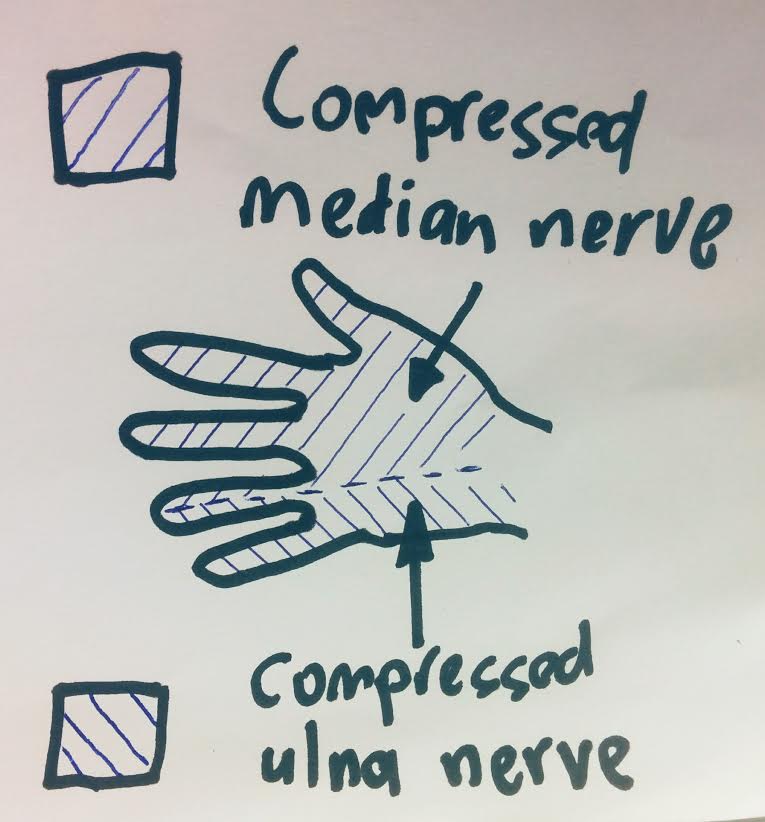
Its taken me a while, but I think I am getting a better understanding of the causes of the numbness/palsy/neuropathy that I picked up during my TourAotearoa in February. I'm not over it fully yet, but at least I can turn the key to start the car, pick up a handful of nuts from a bag, operate a zip, and finally, tie my own shoe laces. Its been 5 months so far. In the beginning my right (front braking) hand felt like it was in a pitchers mitt. It felt numb, and sensitive at the same time. My fingers felt like fried sausages trying to burst out of their skins. It was the top two fingers closest to the thumb, and the thumb itself. Classic carpal tunnel syndrome symptoms, from median nerve compression. The other really common version of this that many riders will have experienced is the ulnar nerve compression which affects the other two fingers, well actually the lower one and a half fingers. One of the professionals I spoke to said the nerves travel a long way along your body and like a garden hose, they can be constricted at many places on their paths, necks, elbows, palms, but the hands tends to be where you feel it.
Some people get muscle wastage as well. I was lucky not to get this and I still had a good range of movement and only about a 30-40% loss of strength, so there wasn't really any therapy advised to help in this area. My GP said up front the options were rest, drugs or an operation to relieve pressure. I opted for rest, which wasn't that hard, given I was tired, and it was very uncomfortable to ride. After a while, a month or two, I got very frustrated, and wondered if it would ever come right. The waiting was worse than the affliction itself, but it was helpful to evaluate the importance of cycling with respect to the "big picture".
This is a personal critique of my own set-up, but it might be relevant to you. It's not what to do AFTER you have "achieved numbness", its what you might do to STOP it occurring in the first instance.
Just remember, there are people who might say that riding a bike for 18 hours a day for 11 days, is not a particularly intelligent thing to do. They might be right, but it is possible to do it with minimal trauma to the hands, as my riding buddies and many others did, to a large extent.
Hand numbness is not uncommon in long distance bike riding, the problem is, with so many variables involved, you cant really effectively test your set-up, because it can take 4 days of riding 18 hours a day, before you even know if your set-up is going to work for you. Even 4 days may not be enough in an event that takes 10, or 16. I had done 4 bikepacking events of distances over 1000kms and never experienced any hand numbness issues, but my set-up for the 3000kms of the Tour Aotearoa Dirt Brevet was not so forgiving. My issues surfaced on day 5 after a rough 20 minute white knuckled descent.
After 4 months of retrospection I have have come up with the following factors which could have lead to the hand issues some of us experienced.
1. Get a proper bike fit from a professional. If you know of a legitimate fitter with bikepacking experience then feel free to share them in the comments at the bottom of this post. Word of mouth would be the best criteria in choosing someone I would think. But someone whose experience is mostly in fitting roadies or triathletes for their bread and butter is unlikely to have the best background.
2. Multiple hand positions. I used to think this was the only thing that needed addressing, but I was proven wrong in the Tour Aotearoa. It's no use having lots of different positions if your overall position is not optimal, but it could help delay the inevitable and get you through a shorter event without issues.
3. Gloves. Wear padded gloves if you like, but if your position is rubbish, its probably not going to make that much difference in the end. I lost my gloves on day 1 of a 5 day event once and never missed them, I was on a fully though. A riding partner wore no gloves at all and he was on a rigid drop-barred CXer. Our riding positions must have been good enough for 5 days riding with no ill effects. Edit. Some gloves can make your hands more numb, beware!
4. Suspension. Bikepackers can get a bit obsessed about saving 800 grams by riding a rigid front fork. Ask yourself if it's worth it. Plenty of people move very quickly even on a full suspension bike. Maybe as we age its a good option to consider a hard-tail or a fully instead of a rigid? 51 year old Brian Alder just came 5th in the Tour Divide and admitted that front suspension of some kind could be a big help.
5. Weight bearing balance. This is the seat-to-hands weight-bearing aspect. In the Tour Aotearoa, my butt was completely mint. I didn't think this level of comfort was achievable when riding 18 hours a day for over 11 days. This was the first time I had ever experienced ZERO
butt-trauma, but also the first time I had hand numbness. I suspect my
fore/aft balance was way wrong. Is there a way of measuring this? I
don't honestly know. Scales under the wheels? If your bars are set up
too low, or too forward, the weight will transfer from your butt, to your
hands/arms and over-load them over time.
Head angle looks too extreme while riding on the drops. My back is too flat to enable a more upright head angle without cricking my neck. Photo Matt Dewes.
6. Bar height. I had been riding on Salsa Woodchipper drop-bars for several years, and never had any problems. I also had aero-bars, so I thought I had plenty of different hand positions. Even more hand positions than my previous flats/bar-ends/aero-bars combo. I am never more comfortable than when I am on my Karate Monkey, on the Woodchippers, or on the aero bars, I could fall asleep in this position I feel so relaxed. Where did I go wrong?
All the cool kids say, when riding off-road on dirt specific drop bars, you should "ride on the drops/hooks" not the hoods. It makes good sense, you have more control, more braking leverage in your hands in this position, more pedalling power for short pitches, and the curve of the bars keeps your hands locked in when the terrain gets squirrely. This was how I rode mostly, when on the trails.
BUT, what if your bars are too low or too forward? When I was braking on the drops I believe my bars were possibly a bit too low, and had to angle my head up in order to see ahead. I spent at least 20 minutes like this on day 5 of the Tour Aotearoa on a particularly rough descent and I suspect this is where I came undone. 20 minutes with your hands clamped tight and your head at a crazy angle is a pretty bad nerve stretch in hindsight. Some people DO have a tendency to set up their drop bars too low, more like they would on a road bike.
There is also a thing called lumbricalincursion where during flexion of the hand the muscles are forced into the carpal tunnel causing nerve damage. My theory is that median nerve damage, caused by the above, is just as likely (maybe more likely) to happen while resting or hard-braking on the hoods, or drops, as it is from resting your hands on the tops of yours bars. The lower your bar is, the more pressure on the hands, and the less on your butt.
While my bars could have been a bit higher I think I would have benefited a lot more from a much shorter stem with more rise.
7. Cock-pit length. I suspect this was the biggest error I made with my set-up. Make sure the length of your cockpit
(top-tube/stem combo) is suitable for you. You don't want to be too stretched
out. If you are stretched out you will be canting your head up on a funny angle again which can cause nerve compression in your neck. About a week before the Tour Aotearoa I rode my buddies
bike. Both of us on 29er steel MTBs with Woodchippers. His stem had to
be at least 3-4 cm shorter than mine, and we both have similar length torsos. His bike felt completely different, his more
typically MTB, mine more like a Cyclo Cross rig. A bunch of nerves called the brachial plexus come out of your spinal cord, down your neck and into your arms. These nerves can be affected detrimentally by over-stretching and wearing heavy packs. I wore a very light back-pack every day, so that is another thing to think about. It's feasible that with my upper buddy extended beyond a natural range that the back-pack could have had an effect, over time, despite the fact that it had very little in it. I was aware of muscle soreness on the undersides of my upper arms at one stage so this may also point to being over-extended with my cock-pit length as well.
The
other side to this argument is, that if your cock-pit is too short, you
may not be able brake or ride on the drops anyway as it will be too
cramped, unless your bar is set up a lot higher. I guess you have to
make up your mind at the start. Are you going to ride and brake on the
drops, or are you going to do what many people do, on AND off road, and
just ride on the tops of the bars or hoods. It would be wise to base
this decision at least in part on the level of technical riding you are expecting in the event.
8. Head position. As above. If your bars are so low that you have to angle your head up, then you are asking for trouble. There is some good stuff on "Points of contact" here from John Hughs, and a link to Steve Hoggs stuff where he says that if your neck is angled at more than 85-90% of its range then you are in dangerous territory, and he is not even fitting people generally for all day riding.
It looks like the angle of my arms is too flat, and I have my head angled down, probably for comfort. (front rider). Geoff (in the red) is also on the aeros but his head is in a more natural position. Photo Matt Dewes.
9. Peaks? I wear a peak, as I have prescription glasses, it protects me from the sun, rain and dirt. I couldn't understand why more people didn't wear peaks, but if your peak is too low, you will once again have to cant your head up on angle to see ahead. Having your head at an awkward angle will compress the nerves in your neck. Adjust your peak to make sure it doesn't interrupt your vision when you are getting in to your most aero mode. My peak is adjustable on the fly, but I don't think I even thought it was an issue. I did not feel any discomfort in my neck.
It looks to me like my peak is obscuring my view and probably causing me to angle my head back more. Photo Matt Dewes.
10. Be conservative. What works for you in a 4 day event may not work in a 16 day event. Aero is good, but not at the expensive of nerve damage. Aero does not equal low, aero equals smaller frontal area (mostly).
11. There is no one best handlebar. To my way of thinking these things are very personal, a lot like saddles. The best handlebar is the one that allows small hand movements that can change the fore/aft pressure on your hands and butt. You should have a set-up which allows these micro adjustments as you ride. This is why I like drop bars. But if I am going to continue to ride on drop-bars, and brake and ride on the drops, I will look at a higher position for the bar compared to what I currently have. Google "LD" stems, that is the style of stem you are getting close to for really comfortable drops-based braking for extending periods.
See Shiggys weight distribution change with
each differing position on his drop bars.
If I change my style to just braking from the hoods, stem/bar height is not an issue. Many of my buddies brake this way, but they are better riders than I and they have more confidence bombing descents with their hands resting on the hoods. Mini-cross levers were Josh Katos solution for confident braking on the top of the bar.
After the the 2015 Kiwi brevet, Joe Jagusch suffered from debilitating Carpal tunnel Syndrome for a year. This is the set-up he used in the Tour Aotearoa to combat his earlier problems. Scores high on the "LD scale" but it worked for him.
12. Aero bars. I think aero bars are great, but as mentioned above, don't get sucked into an uber-low position. They are there to relax onto, and increase your aero-ness a bit, but don't set them so far forward that you over extend your arms and end up tilting your head back in order to see ahead.
A lot of people are using the fred-bar styled arrangements that give the aeros extra height and clean up the "handle-bar-real-estate" area.
People who throw on a set of aero bars at the last minute are asking for trouble because generally.
1. They wont have had time to adapt to them.
2. They will probably use them a lot more than they thought they would, making any problems worse than they thought possible.
3. My gut feeling is, the longer the event, the more likely it is that you are going to use your aero bars.
13. (A late addition). Bar tape. If you have big enough hands, think about double wrapping your tape or using appropriately placed gel inserts. Some people swear by double wrapping.
14. (A later addition). Core strength! A strong core will help you in many areas, but it will help support your upper body weight and keep some of it off your arms.
15. (A later later addition). Finger exercises to relieve numbness on the bike as practiced by Cliffy in this years Kiwi Brevet.
These are just the things that I have observed that I believe effected me. There are quite a few factors in there to be considered. In isolation you might get away with a couple of problems, but the longer you are out there, the more chance they have to come into play. This ramble is very "drop-bar-centric" given that that was my experience, but I believe most of the things I have looked at are universal. I used Salsa Woodchippers, but there are many other drop bars out there. Read the comments on Guitar Teds link to see what other drop-bar users use.
Maybe a check-list could be something like this:
1. Choose your bar/s.
2. Decide how you will use it
3. Determine the optimal cock-pit length
4. Determine the optimal stem/bar height
5. Make sure there are varied positions available possibly with bar extensions and or aero bar add-on options.
6. Try to get the fore-aft butt-to-hands balance right.
7. Check that with the above all done, your head angle is comfortable over time.
8. If in doubt, err on the side of comfort over speed.
9. Maybe look for a proper bike fit first, if there is someone close. It might give you a better starting point?
It might feel nerdy, but get someone to take some side on shots of you in varying positions with you bike on a stationary trainer with the front wheel level to the back. I don't know the exact angle your upper arms should be at. Its likely to differ a bit, depending on how low the bars are, and whether or not you are using a fred bar mount or risers of some kind on your aero-bars, if you are using aeros.
Its now 6 months since I started the 2016 Tour Aotearoa. My hands are at 97.5% I reckon. Time heals. It was the best event I've ever done. I look around at some other events that have been and gone in that time, and others that are just about to start, and I realise how lucky we are in NZ to do such a diverse ride. Would I change anything?
Sure, I'd put on a shorter stem !
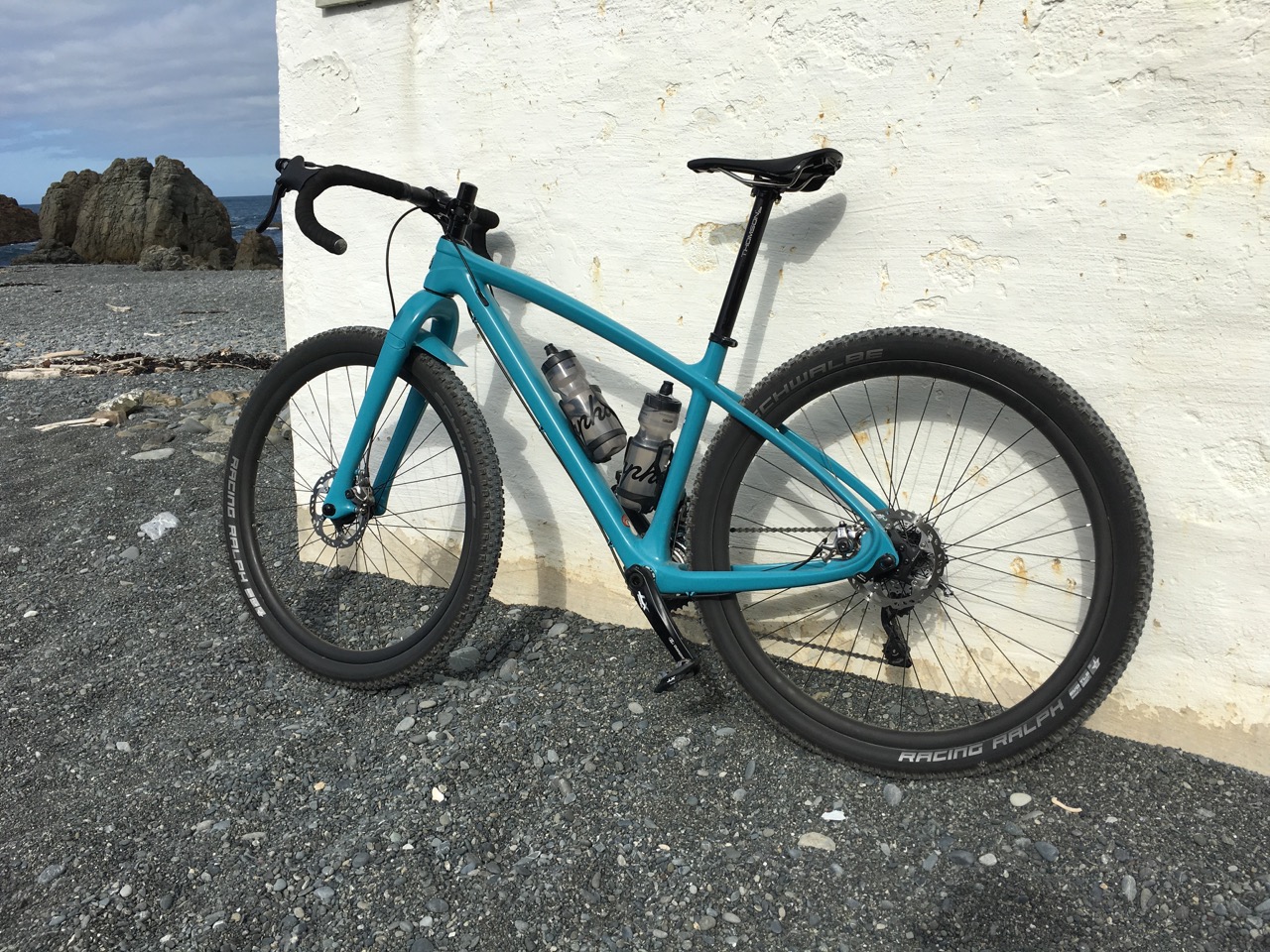
Like me, Nils van der Heide lives in Wellington, and yet I only met him once before the 2016 Tour Aotearoa. His bike was a bit different to most, and he had obviously spent a lot of time getting Jonty at Revolution Bicycles to build it up. It was a very sound machine. Nils shares some pix and a bit of background to it.
The day I heard about the Tour Aotearoa over a year ago I thought:
“this is me”. An amazing opportunity to explore New Zealand, and what a
great way to do it by bike. I had been looking at the Kiwi Brevet for a
couple of years now but time wise could never commit to any of them.
This would be my first adventure of this kind.
I
soon worked out that cycling 3000km on my full suspension Yeti would be
a long way. A bit silly really as 3000km is a long way regardless.
However this is where the idea started to build my own bike from
scratch. A unique chance to build a "go anywhere, do almost anything”
kind of bike that would not be fast and work well. Furthermore I wanted
it to be aesthetically pleasing as I work as a designer.
After
doing some research online I soon worked out that a bike suitable for
the Great Divide Ride would most likely be suitable for the Tour
Aotearoa (TA). This is where inspiration for certain ideas started.
Since I am extremely pleased with the geometry of my full-suspension
Yeti SB95 I decided to turn Yeti's rigid carbon ARC frame into my
starting point. The next question was front suspension or not. I decided
to go rigid as it is lighter, there are fewer parts that can break (=
less maintenance), and would cater well for 80% of the terrain.
The
next thing to decide on was the cockpit. I had been intrigued by the
Salsa Woodchipper bars for some time now and thought they would be the
way to go for my bike. I liked the idea of dirt drops but it turned into
a big time consuming effort to find brake levers and shifters that
would work with the Shimano XT Dyna-sys derailleurs for my 2x10 setup. I
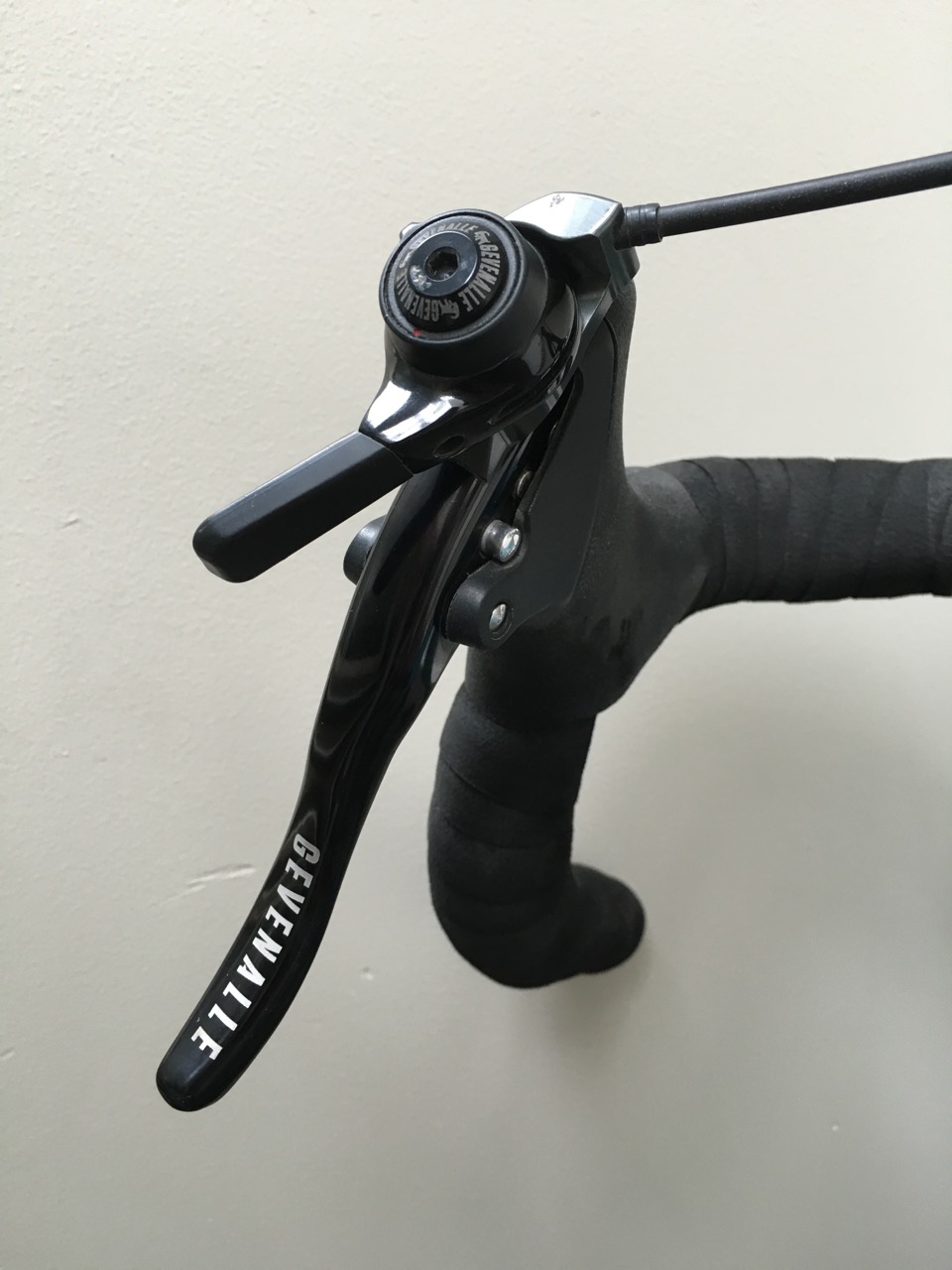
ended up with a set of Gevenalle GX shifters. They are probably one of
the most notable parts on my bike. They’re like a funky old set of thumb
shifters mounted onto Tektro brake levers. The shifters take a bit to
get used to but they work flawless. Another advantage is that you can
run them indexed as well as friction. Furthermore I used a Fred Bar to
mount my aero bars onto. I read good things about them as they put you a
bit more upright while riding in the aero bars. This proved very useful
on 10+ hour days in the saddle.
It was
amazing to see the bike come together and it’s even more fun to ride. A
big shout out goes to Jonty from Revolution Cycles, Oli at Roadworks,
Zeph at Cognitive Cycle Works and Kashi at Yeti NZ for all their help.
The bike really inspires me to ride just about anywhere. Drop bars and
fat tyres go a long way, they are an awesome combo. I did end up
swapping the Woodchipper bars for the Cowchipper. The biggest difference
is that the Cowchipper allows me to ride off road tracks in my drops.
My hands are too small for the Woodchipper and were sliding down going
over rough terrain.
To date I have done about
5000km’s on my “one of a kind” Yeti, including the Tour Aotearoa. It has
proven to be a great brevet bike for this type of terrain. I would love
to take it over to the States one day and ride the Great Divide Ride on
it too. Here’s to adventure…!
• FRAME: 2015 Yeti ARC Carbon - size medium
• FORK: Enve Mountain Fork 29" – tapered steerer, 15 mm through
• PAINTWORK: Custom painted in Yeti turquoise by Guy
• HEADSET: Chris King
• HANDLEBAR: Salsa Cowchipper – 44cm wide model
• BAR TAPE: Specialized Roubaix Tape plus Bar Phat gel pads
Aotearoa New Zealand. A 3000km
unsupported bikepacking adventure.
I think we are lucky in New Zealand, on several fronts. We have a relatively small country with constantly changing scenery and terrain that can both challenge and
inspire. We also have people wanting to share it with the masses. The
Tour Aotearoa was a vehicle for the organiser Jonathan Kennett to
introduce a new cycle path from the northern most tip of the country to the
bottom. By no means did we take the shortest route, but we did take in
some amazing trails and scenery. We have a style of bikepacking in NZ that
allows participation by people who might be put off by the caffeine
fueled all-nighters that are the norm in some other events. A mandatory 6
hour stand-down for every 24 hours makes the events safer and more
achievable for many. The event was capped at 300 riders. In the end around 230 started and around 18 pulled out. That's not a bad completion rate.
Drafting is legal in most NZ dirt brevets, but you do have to deal
with the personalities of your fellow riders if you chose to ride as a
group for the duration. Someone commented that if we were spending 100%
of the day with our spouses, it would likely result in a divorce after a
few days of limited sleep.
In our case, on the first day a self-selecting team was born,
comprised of Geof Blance, the Tour Divide 4th place finisher from 2014,
Matt Dewes a graphic designer with an eye for a great shot, and Steve
Scott, the hard man roadie with 5 Tours of Southland under his belt.
Geof and I were the only ones with previous bikepacking experience. Matt
had spent time as an under 23 XC racer in Switzerland so we knew he had
a big motor. To date I still haven't seen his conversation threshold
breached. He was young and fit and would dance up the hill and take
snaps as we rode past, sharing them on social media when cellular
coverage allowed.We have Matt to thank for most of these images. If you have ever watched the Tour of Southland you know what kind of an animal Steve must be. It must be the hardest race in the southern hemisphere with hills and the kind of weather that makes you put an extra duvet on your bed.
Day 1. Cape Reinga to Waimamaku. 206kms. Strava Cape Reinga to Kohukohu, Strava to Cape Reinga Waimamaku,
Day 1
was always going to hurt. New Zealand is a very hilly country. I knew from
experience that average speeds for the fast guys in dirt Brevets in this country are
around 14kmh. We had to average over 20kmh to make the last 8pm Ferry to Rawene. Unfortunately mother nature had other plans in the form of a
head wind on the beautiful "90 mile beach". Bikepackers learning to
ride in echelons was a comical thing, and I was struggling with cramp
for some reason.
I ended up stopping to clean my chain at the end of the 88km beach segment before carrying on, in hindsight a bad move. We had a
whole lot of climbing to do after the beach, before reaching the Ferry and we killed
ourselves to get there. It would have been nicer to save that extra 10 minutes of energy. We time trialled our brains out to arrive at
8.02 pm. Luckily the ferry hadn't quite pulled out. Phew. It was like an 8
hour stage race. Not bikepacking as we know it. The beach was really
something and one day I'd love to go back and enjoy it with less
pressure. There was a funky little whole-food shop there at Rawene and we spent plenty of time stocking up on pies and stuff for the next day. Most of the other riders hit the road straight away, but a few decided to stay at Rawene, including Darren Burns, who had already broken his saddle, not sure how, maybe a violent "buttock clench" after seeing people rub wheels and go down right in front of him on 90 mile beach ! There were a few moments out there for sure. Someone tried to lecture Steve on how to lap out in an echelon which was a bit of a laugh considering his "roadie" background.
90 Mile beach into a head-wind. Photo by Matt Dewes.
The night was still young so we carried on for another 25 odd kms to Waimamaku where Geof spied a good spot behind a local hall for us to bivvy in. No need for tents yet as it was very warm. There was a tap on the side of a building which was good for those of us who were washing and alternating their shorts daily.
We just made the first ferry at 8.02 pm. Photo Matt Dewes.
As we were preparing to leave the next morning at 5am we saw a few people roll past in the dark, moving onto the first photo point of Tane Mahuta, the giant Kauri Tree in the Waipoua forest. The problem with only stopping for 6 hours a day is that you miss about 5 hours of scenery due to darkness.
Day 2. Waimamaku to Hunua. 138 + 116 = 253kms not including the boat trip.
If
we thought day one was hard, we were in for another shock. We still had
to average around 20kmh to get to the next (Poutu) Ferry by 12pm. I think a
lot of people thought the TA was going to be a fast "roadie" affair with
lots of sealed roads. They were wrong. As soon as the first hills
abated we were into a series of relentless steep gravel climbs that just
kept on coming.
By the time we got to the "ferry" 7 hours later we were
cooked. We were also 12 minutes late. But the boat was still there. The
next one was at 6pm that day, so we had to catch this first one.
Imagine riding into the red for 7 hours, then clambering up a loosely
mounted modified aluminum ladder attached to a tiny boat rocking
around on a high tide with a 22 kg bike on your shoulder. It was funny
and grim at the same time. As usual, somehow Matt managed to photograph
it for posterity. I guess there were about 20 of us who made this first
cut.
Sad story of the day went to Kevin Moginie. He must be incredibley strong, as he had the aerodynamics of a Mack truck as he motored along on his full suspension Santa Cruz. He caught us earlier in the day, then I think we recaught him at Dargaville. I saw him taking a turn on the front at some stage and then he just disappeared. I guess we assumed he had a mechanical. Apparently he wasn't that far behind, and he missed the boat! Not to be deterred I think he may have caught up and passed us again by Mangakino on day 3.
Now the pressure was off, or so we thought. No more ferries to
catch, for a while anyway. Event organiser Jonathan Kennett had decided
that if we wanted to, we could utilise the 3 hour boat trip as part of
our 6 hour continuous downtime block. We took Geofs advice as a seasoned
campaigner and decided not to use the boat time as part of our 6 hour rest. A few of them did, Ollie, Seb, Anja, Matt, Cliff. They rolled
down the road to the closest cafe and took the extra 3 hours napping
there.
Boarding the Ferry, what an experience. Photo Matt Dewes.
Before very long we were getting close to Auckland,
already we were missing the friendly locals from the far north and the
lush green country side. Now it was fast commuter traffic then the urban cycle-ways of Auckland. We saw some sights, including a commuter, completely on the rivet with a full-face DH helmet on. We couldn't wait to get out of there and
back into the boonies. We climbed up Mt Eden to be greeted by a couple
of "blue-dot junkies" who had been following us the whole time. What a
buzz, We were actually leading the event as the other "Ferry sleepers" hadn't caught up
yet. We shortly hooked up with Nick and Ben who knew their way around Auckland and navigated us to a McDonalds where something gave me the worst case of acid-reflux I have ever had.
Were winning! (But its not a race). Photo by blue-dot junkie ; )
We headed off to find somewhere to stay. Geof was keen on
accommodation but we saw nothing on route and before long we were into the
Hunua Ranges which is still kind of on the outskirts of Auckland.
Finding a place on the road side out of view of local farmers was a
challenge. Eventually after descending down through the Hunua Ranges Geof
spied a good spot amongst some trees that turned out to be mint. Another
night out with no tent and no problems.
It was another 5am start from memory. As we rolled away the duo of Nick and his buddy
Ben caught us as we glass-cranked along, as Matt had gone back to retrieve the
sunnies he dropped at the camp site. Ben was "off the grid" riding with
his buddy, not carrying a tracker, but he could sure pump out the watts.
We rolled through the very tame Hauraki Rail Trail, then
onto Matamata. This was a massive section for the aero bars and the
going was fast. Steve was mashing on the front so hard that we had to tell him to ramp it back a bit.
Maybe it was "milking time" or something, but I was surprised at how few cows I saw! It was quite a while before we saw some closer to the Paeroa end of the trail.
We eventually joined up with the extensive Waikato Trail
network where we were happy to meet Stephen "Stealth" Butterworth who
had been following our progress.
Hauraki Rail Trail
The effort people made to try and say
hello was really appreciated. We eventually came across a large dam at
the head of Lake Waipapa and were met by a bunch of well wishers who I
assumed were all Matt's family, but it turned out that the guy offering
to clean and oil drive-trains was a blue-dot watcher and blog-follower.
What a surprise. It really felt to me like we were in the middle of nowhere. I decided that when I was finished the TA, I was going to go over the entire course to see where the hell I had been, because I hadn't really done any research on the course as such.
The next piece of trail was really good, unfortunately
it was very dark, and technical enough that the slow speeds we were
doing were not enough for 3 out of 4 of us to generate good light via
our dynamo lights, so it was on with the spare helmet lights. At one point it seemed like we had ridden the same piece of trail more than once, and every now and then there would be a granny gear climb to take back all the elevation we had just lost. I thought about Cliff Clermont and his 1x11 drive train and wondered if he was still enjoying it. I couldn't believe how much time I spent in my lowest front sprocket and was very happy to have a triple, as were Geof and Steve.
Geof, Stephen, Jeff, Steve.
We
eventually made it to the foreshore of Lake Maraetai at Mangakino where we were
surprised to find an American woman who had been doing parts of the
course independently of our organised effort. A toilet block with
running water was an added bonus to this site. This was the first night
we used our tents.
The
next day was to turn out to be a bit of a tough one. We got into some
pretty uninspiring 4wd track for a while and Geof was having some
"sleepy moments" but it didn't seem to slow him down at all. We hooked
into the Pureora Forest Timber Trail after a while and it really was
quite beautiful.
Steve rides one of the massive swing bridges on the Pureora Timber Trail. Photo Matt Dewes
We learned that Matt had incredibly, in our view, taken his fiancee
(not really a cyclist) through the Timber Trail one day, the poor
thing. We all decided she was a keeper. It was 85 kms of relentless
singletrack with track markers every 1km. Some people liked the markers,
most didn't. Matt was riding a Cannondale Cyclo Cross bike, but to see
him ride you would think he was on a fully. It must be great to have
those kind of skills.
Skills will only get you so far ; )
Fate caught up with him and a sidewall cut in his
tubeless tire meant a boot and tube had to be used... once he could find
the gash.... Geof used this occasion to catch 40 winks and during this
interlude a small troop of riders caught us and rolled through, Rob
Davidson, Dave Cooper, Linda Wensley and her husband Craig. It really
felt as if we had been on the Timber Trail all day. A full suspension
bike or even a hardtail would have been great, but we were stuck with
our over loaded rigids, on what would have
been a really fun trail in normal circumstances.
Matt in Pureora Timber Trail.
We emerged from
the forest to another group of well wishers from Matt's whanau. He
really had the North Island covered. Wellington rider Nils caught and passed us as we
chatted to them, he seemed to be on a mission. Later on we called into the
McDonalds at Taumaranui and while we replenished our supplies Geof
mentioned that there was an open home within riding distance. I rang the
number and suddenly realised that I knew the host. It was sorted.
Before long we were being treated to such luxuries as electric lighting,
a washing machine, a dryer and some amazing soup that our host Paul
Chaplow had put on for us. I think Geof knew Paul from his adventure
racing days and he looked after us like family, it was a complete blast.
We were overcome with the luxury of it all.
Day 5. Owhango to Wanganui 190km. Including boat trip. Strava
We
hit the road with a cheery goodbye from Paul who had graciously gotten up
to supervise our departure. Our initial goal was getting to the Bridge to
Nowhere, and joy, another boat to meet. The good oil was that you got yourself to
the Blue Duck Cafe and booked a Jet-boat from there, meeting them 4
hours later at the trail end. The familiar theme of racing the boat had
returned..... The initial trail was narrow and a bit slippery,
considering it was the height of summer. I managed to twist my chain
dealing with chain-suck so was forced to shorten my chain, very quickly.
It was a shame that we were once again suffering from "boat-anxiety" as
the scenery was quite beautiful and a bit more time to take snaps would
have been great.
This was the height of summer and the trail was still slippery. Photo by Matt Dewes.
The trail widened and we were greeted with a very long,
maybe 20 minute descent? I was not enjoying it too much on my rigid
drop-barred bike, and by the time I got to the bottom, despite several
rests for arm pump, I had two numb braking fingers that still haven't
come back to life, yet...
Another swing bridge. Photo Matt Dewes.
We got to the trail end with 20 mins to
spare but still had to wait for a few more tourists to pad out our boat.
The trip down the river was great but I have to say I spent most of it
asleep.
About to catch a jet boat. Photo Matt Dewes.
As we got off the boat we were hit
with blinding heat and the urge to find as much food and drink as we
could. A small cafe in a local Lodge was just what we needed.
THE Bridge to Nowhere. Photo Matt Dewes.
We caught
up to Greg Galway who I think had passed us in the night, sleeping
rough, as he did, every night of the Tour. I guess he had missed the first two boats, but had managed to make up some good time on the faster sections. He seemed keen to ride with
us but some of us were struggling a bit on the rollers out of Pipiriki
so Greg eventually rode off to do his own thing.
There were the odd compulsory dismounts. Photo by Matt Dewes.
By
the time we got to Wanganui we were feeling like some accommodation
again. Paul Chaplow's open house had spoiled us. We had a beer, which
went to our heads immediately, and I booked a room in a very swish joint
100 metres from the supermarket.
Because
we hit Wanganui relatively early we had to leave early so at 4am we
headed for the 1st photo-point of the day. Obviously it wasn't open so we took our photo and moved onto some nice deserted b-roads. I was feeling good, and probably
trying to keep warm as much as anything, but I got the feeling that the
rest of the guys were not as frisky as I was. As we hit Hunterville
Matt's parents turned up to wish us well. God knows what time they left
Taupo to get to Hunterville in time to meet us. As we were just about to leave Steve recaught
us and we were off on what must have been the biggest stretches of
gravel we were to encounter.
Even the gravel had gravel on it. It was the day of gravel. Photo by Matt Dewes.
We practically traversed across half the width of
the North Island at this point, before we started to head downwards again, and
there was plenty of elevation in there too. Apiti, Ashhurst and finally
Palmerston North where we stocked up at a gas station and booked a
ferry crossing to take us from the North to South Islands. Not knowing
how long it was going to take us to get there meant we had to give
ourselves a bit of breathing room if we were going to avoid another case
of "boat-anxiety".
There was morning gravel and evening gravel. It was also our longest day. Photo by Matt Dewes
We exited Palmie and met a really
cool supporter on the trail with her young toddler, handing out
ice-blocks and bananas. We would have loved to chat more but we had to
keep rolling. The next piece of gravel linking us to Pahiatua was a real
blast and then I think we scored some tail-wind for the segment into
Eketahuna. We caught up with Nils again there and he still seemed to be
on a mission, dropping us when ever he felt like it. I texted Jonty from Revolution Cycles, who built Nils's very flash bike, and asked him what his background was. Jonty said, "He has never done an organised bike event before".....
There was a ton more gravel grinding to do before we
eventually grovelled into Masterton, the bogan capital of New Zealand.
Matt had booked us a very nice room but before we could get there we had
to put up with 4 drive by attacks by the local bogans who would throw
milkshakes or slushies at us as we rode. This was the only kind of
encounter we had come across like this and it took the gloss off what
was our biggest day at 310kms.
Day 7. Masterton to Pelorus 144 + 54= 198kms not counting the ferry Strava
This
was the day we were to meet the Cook Strait ferry in Wellington to take us to the
South Island so we got our lapping out sorted pretty well on a piece of
road I had raced the masters time trial nationals on a few times.
Unfortunately as we straightened up for the run over the Rimutaka
Incline, in true Wellington style the wind came up. It stopped us in our
tracks, and blew us off our bikes, but luckily, as locals, Matt and I
were able to reassure the others that it was only temporary, at some
point it would be behind us, mostly. We were very lucky to have at least
3 sets of buddies ride out to meet us and escort us into Wellington via
the local river trail network and we spent time in the Ferry terminal
with family, and friends. Most of the riders we had come across in the
previous days were on another ferry that was leaving 2 hours earlier but
we chose to chill and do the family thing rather than hop boats.
Rimutaka Incline. A very short walk. Photo by Matt Dewes.
Steve
had decided he was going to sleep on the ferry and use it as part of
his 6 hour sleep as some of the others had done earlier. The rest of us decided
not to, and after a beautiful evening riding through the Queen Charlotte
Sounds road, Geof, Matt and I camped at Pelorus.
It was a magical night as we left the Ferry and rode the Queen Charlotte Drive heading to Pelorus. Photo Matt Dewes.
The
Maungatapu was probably the most sustained off road climb of the TA, and
after about 20kms of introductory gravel we worked our way into it, all of us trying to clean the gnarly bits but all eventually succumbing. Matt
despite limited gearing probably did the best. His 34/40 front/rear
ratio was pretty damn good for someone with his young legs, but the loose rocky surface was the undoing. Of course he
cleaned the gnarliest part of the descent into the Maitai Valley. I
walked it.
As we came into Nelson I was greeted by my
cousin Paul who was whooping and hollering with excitement and we rode
with him to a cafe where we got a coffee fix and a few more sweet treats
before we took off. Craig and Linda were there too, with Craig about
too go to a GP to have his nether regions checked out. As we were just
about to leave my Aunt turned up which was also a highlight. She
had been watching the dots and was really getting into it.
Climbing the Maungatapu early in the day. Photo by Matt Dewes.
We
headed out of town on the local trails and when we got to Richmond were
joined by my buddies Susie and Gazz who were keen to accompany us on
the trail which took in one of their favorite training loops. It was
great to have fresh company. They were fresh off the Pioneer MTB stage race and were probably keen to see what these smelly cycle-fred tourists were all about.
Somewhere on some Gravel... Photo by Matt Dewes.
We eventually went our
separate ways near Dovedale and took in a whole bunch more gravel on the
way to Tapawera. On one of the big gravel descents I got a sharp pain
in my left quad which was to effect me badly for the rest of the tour. I
managed to keep pedaling, and it seemed to be alright upon waking most
mornings, but then get worse during the day. We picked up Steve again
at Tapawera and he was regretting his night without sleep, after
combining his ferry into his 6 hour sleep block, but at least he caught up
with his kids in Nelson. We pressed on through Lake Rotoroa and the Braeburn and did a
raid on the dairy at Murchison and after a beer and burgers at the
Commercial Hotel we rode on, eventually finding a camping spot somewhere
in the Maruia. Once again, another beautiful spot we missed because it
was dark. Luckily I had been through there 3 times before in the Kiwi
Brevet, twice in the day time.
The
morning on day 9 was uneventful as we climbed up out of Springs
Junction for some time, before getting a nice gentle downhill and
possibly some tail wind into Reefton. It was time to refuel and head
into the technically demanding Big River and Waiuta tracks. Not specific
man made tracks for biking, these were left over from the gold mining
days and were in places actually river bed. I called into the bike/sports shop there and chatted to the friendly lady, mentioning that my grandfather used to run the butcher shop in Waiuta before the gold dried up and it became a ghost town. She said that this very building we were standing in was one of the last to be removed from Waiuta and may well have been his.
Geof picks his line in Big River.... Photo Matt Dewes.
My left leg was not happy. Every time I hit a bump it
would shock my left quad and I would bleat like a baby. I'd been through
these trails 3 times before in the Kiwi Brevet, but knowing what was
coming up didn't make it any easier, even though I knew the tracks were
in as good a shape as they had ever been. There had only been about 10 people ahead of us, not enough to impact the track surface.
Big River. Photo by Matt Dewes.
It was hard work. I couldn't
wait to get out. Maybe there is a difference between doing this trail
with 2 days in your legs compared to 9. Maybe I was just soft. Matt was
loving it on his cyclo cross bike and taking some lovely shots. I felt
like a real whinger, at least I had fatter tires than Matt, I should
harden up. The wet rooty bits were not to be underestimated. As usual
Geof was very stoic but somewhere along the way we had lost Steve again. Matt said that this was his favourite section.
Big River. Photo Matt Dewes.
We finally got out and our first stop was the
Ikamatua store before heading to Greymouth. After we had refueled I
realised that I had lost my spare dry-bag somewhere in the Waiuta. I was
gutted. It had my beanie, arm warmers and leg-warmers, and my buff.
They say in bikepacking you pack your fears. My fears are, 1, bonking,
2, getting a saddle sore, 3, getting too cold. If I don't get my beanie
and buff on as soon as I stop I can revert to a shivering mess in
seconds.
Matt in the Waiuta.
We were just about to leave Ikky when Steve turns up, my green
dry-bag hanging off his bars. What a dude! Steve refueled, we pulled out but unfortunately he went off
the back on the first climb we did after crossing the River and I didn't
notice. I felt terrible. He'd just saved my arse. We even stopped at the Pike River monument thing but still no Steve in the distance. But what do you know, we got to Greymouth, and
were just about to leave the Subway and Steve turned up! He was like
the Terminator. We did a quick shop and I managed to dial up some
accommodation in Kumara township, smack in the middle of the West Coast
Wilderness trail. Score, the proprietor also owned the shop! Pies,
lollies, all the good things. It was win-win and the team was back
together again!
Day 10. Kumara to Pine Cove Motel 275kms. Strava
During
the week an old friend from Christchurch, Ian, had been texting me,
saying he wanted to catch up and ride with us for a bit. Ian was a very
accomplished XC racer in his day, but I had no idea how fit he was
currently. Long story short, when we left Kumara at 5am the next
morning, Ian, his wife Lucy and Daughter Katie (in her pyjamas) were
there. Wow, what a send-off. Ian was on his old Raceline with v-brakes
and a household torch strapped to his handlebars! Geof had his MC-hammer
pants on this morning and the pace was on from the start. The West
Coast Wilderness Trail is a fun, fast and achievable trail for most
people. Unfortunately we had to do a detour and missed one of the best
parts of trail as we rode into Cowboy Paradise, a western themed Lodge
overlooking the beautiful Arahura Valley. The proprietor came out to
chat and mentioned that he barely got a sideways glance when the front
runners came through.
Lake Kaniere
We carried on to the back of Lake Kanieri and took
in the new trails alongside the water race that led us into Hokitika.
Somewhere out of Hoki Ian got shelled, then lost! He didn't have a GPS,
but he did have a cell phone and a wife. We rolled into Hoki, spied
Geof at a cafe, ordered a coffee and pie and sat down. Geof announced
that he was off. Ok. He might see us later. We waited for our coffees
and pondered our next move.
The rest of us
left and got into a good groove, losing Steve on an undulation somewhere
along the way again, Matt picking up his 2nd puncture. After riding through two herds of cattle we eventually picked up
Geof at the Hari Hari cafe about 75kms later.
A River somewhere between Hari Hari and Haast.
The
West Coast of the South Island has a scenery unique to itself, with
wide flowing rivers and strange tree forms.
There are two Glaciers that come right down to sea level. The Franz and
the Fox glaciers. They are unsurprisingly connected by some fairly
challenging hills, although they were on sealed road. Matt and I were
both struggling with left leg issues. Me with my dodgy left quad, Matt
with a tender knee. He'd had a minor Achilles problem earlier and asked
what he should do. I jokingly replied, didn't you read my blog post on Achilles issues? He hadn't, so, figuring that his cleat bolts were
probably burred to the point of difficult extraction we dropped his seat
post by about 5mm. The relief was instantaneous.
A hill somewhere between Franz and Fox. Matt discovering his seat height is not optimal. Amazing what 10 days of over-use syndrome will tell you about your set-up.
I
had rung my Osteo from Franz and left a message on his phone, asking
what I could do about the continued numbness in my right hand. He rang
back as we were navigating the little trail out of Fox and gave me
some exercises. Unfortunately they didn't help.
We
dropped down into the granny gears for the big climbs between Franz and
Fox and I told Geof we would have to catch him later as we were both
broken arses. Geof promptly dropped off the back himself. He had his own
problems. We were a sad lot, but regrouped at the top and rolled into
Fox. Geof and Matt researched some accommodation down the road and made a
phone call. We seemed to be on a mission to get there and ripped along
at a pretty good pace, wondering when the hell we were going to find it.
Each new corner revealed nothing and we pressed on. Then in the middle
of nowhere, a little group of motels sprung up, 35 kms outside of Fox.
The Pine Grove Motels were one of those oases in the middle of
nowhere. Very basic, but more than enough for a bunch of wasted smelly
cyclists. AND they had food. We washed all our clothes again as well.
Pure luxury.
Day 11. Pine Cove Motel to Arrowtown. 291kms Strava
It
was the usual 5am start and we rode on, eagerly awaiting the sunrise.
Matt reckoned he saw a light up ahead. I thought he was hallucinating,
but he was right. We were catching someone. Who could it be. Anyone
ahead of us had a fairly good gap by now. Knock me down with a feather,
it was Steve, the terminator. He had passed us in the night and bivvyed
out in a shelter in the Copeland Pass. It was great to catch up again.
Geof had another sleepy moment but we got through it and motored on to
Haast.
Terminator Steve Scott looms out of the mist. Photo by Matt Dewes.
As we rolled in to the cafe there who did we see? The affable
American Cliff Clermont. He was about to leave, but always a sucker for
company we talked him into another round of coffees and we all left
together. Cliff and I had ridden most of the 2014 Kiwi Brevet together
and Geof had ridden with him in that years Great Southern Brevet as
well. Cliff had started out with the initial leaders, so we were keen to
catch up on all the gossip but it would have to wait until we were on the
road.
Another River somewhere around Haast. Photo by Matt Dewes.
For some reason we were lapping it out very fast again. Cliff,
always the negotiator suggested we dial it back a tad if we were going
to have any chance to catch up on the news. There were some good steep
pinches through the Haast pass so now I had to battle the gradient with a
numb right hand that I could only use the bottom two fingers on for
braking and a left leg that was only really at 50% power.
The
leg was really annoying. I looked down at it, then across to my
top-tube mounted water bottle. Had the water-bottle cage shifted? I had
mounted it using the "insulation tape hack", as I had done to the down
tube and front fork cages.... I suddenly had an epiphany. When I would
come to a stop, but sit astride my bike I was putting pressure on the
top mounted cage and bottle, and had imperceptibly been moving it
sideways over the previous 10 days, and I was also unconsciously moving
my left leg further to the left to avoid brushing against it! I was
riding bow-legged ! This was the cause of my pain. I stopped
immediately and kicked the cage off with enormous satisfaction. I still
had two more bottle cages and a camelbak so it wasn't the end of the
world. I felt better already, but the damage had been done. 2 weeks
later its still not 100%.
We stopped at Makarora Cafe
for a lunch break and I waited for Matt who had a last minute thing to
sort. Geof's MC Hammer pants were on again so it was quite a while
before we caught him and Cliffy again. There were more hills on the
approach to Hawea and we stopped for some photos at the "neck" of the two
big lakes, Wanaka and Hawea.
Photo-op at "The Neck"
We were straight into a trail at Hawea which from memory we
followed all the way into Wanaka. The pace was still on but it was good
to be on some dirt again. The previous two days had been 90% seal where
we were doing battle with tourists in camper vans, who I have to say
were pretty well behaved. This part of the South Island is pretty much
fully booked out for accommodation from November to March.
We
grabbed a burger and beers at a cafe in Wanaka, Geof and Matt called in
to Rick Woodwards bike shop, Outside Sports, Geof for a gear tweak, Matt for a new
nipple... for his camelbak, it had fallen off on the outskirts of Fox.
Ignorance
is bliss, at least temporarily. After the obligatory shots outside
the Cardrona pub we had to do the Crown Range. I had never ridden up it
before, and I did it in my middle ring as I figured that if I changed
down and dropped the chain onto frame again, as I had been doing, I
would probably just end up walking it. We had done close to 250kms already that
day, and there was more to come. At the top we rugged up again
for the descent down the other side onto the cycle trails that would
take us into Arrowtown. Another pub stop there and then we went and set
up camp at the local camping ground.
Attacking the Crown Range at night fall. Photo Matt Dewes.
Day 12. Arrowtown to Bluff 290kms, including boat. Strava
We
got a sleep in on this day, til 6am. We had to catch a 10 am sailing of
the Earnslaw steamer to ferry us across Lake Wakatipu to Walter Peak
and Mount Nicholas. Geof's local knowledge meant that we had time in
hand to crank out 40kms of local trail and still have time for a leisurely cafe breakfast while we waited. A buddy from Wellington's nephew was following the ride and joined in with us on his jump-bike as we wound our way into Queenstown. Greg Galway was
also there waiting for the same boat. I was impressed with Greg's ride.
He'd spent most of the time by himself and bivvyed out every night. Not
only was Greg there, but Steve had done another superhuman effort to catch up as well, camping at the foot of the Crown Range and hitting it early that morning.
My buddy Ed Banks is a school teacher in Wellington and he chatted me one day to say that he had shown his class at school the tracking page and they were hooked, so he had it up on the big screen all day. He chatted me again while we were at Queenstown waiting for the Earnslaw and he asked me if I would mind it if the kids could ask me a couple of questions. Next minute the phone rang and we had a bit of a chat and then answered some questions for the kids. It was a very cool moment for me actually.
Geof wheels his bike onto the Earnslaw. Photo by Matt Dewes.
A couple of times during the Tour Aotearoa Matt had joked, "I'm gonna grow some balls and do a
break-away today and drop you guys". It was a bit of an in joke. The
thing was, we knew he could, at any time, if he wished. But on this day I
was feeling good. It was still early in the day, my legs hadn't started
to pack it in yet. It was around 11am when we got off the boat at Walter Peak, only 250kms to the
finish and my cousin Sam had told me there should be a tail wind. It was
time to put on the MC hammer pants...
Fresh legs after a coffee and pie on the Earnslaw Steamer having just crossed Lake Wakatipu. Photo Matt Dewes.
I went to the
front and picked up the pace a bit. It felt good, we already had tail
wind so I kept winding it up until we hit the first climb and just kept
going. Part way up the hill Matt shot by. I thought, oh, he's going to
the top to take some more photos of us! What he'd actually done was
grown those balls. He wasn't at the top waiting....
Cliff
had got to the top with me, but his 1x11 just wasn't up to it. I shifted it into the 44 and got down on the aero bars. I looked
back and Cliff was slumped across the bars. I was on my own. The tailwind
was amazing, smashing it across the tops at 48kmh on the aero-bars in
my 44-11. This was me having fun. Gravel, tail wind, aero-bars and 250 odd kms to go, I was truly in my happy place. From this point on it was just hammer. I wasn't
stopping for anything. There was miles of gravel past the Mavora lakes
turn off and on towards Mossburn where my Southland cousins all come
from.
I talked to a grader driver working on the road and he said he saw
another cyclist 15 minutes ago, going like the clappers. That would be Matt.
The new Mossburn cycle trail was a bit of fun but I just rode straight
past the township planning to pick up some food later. I had
plenty. I was really enjoying riding by myself at my own pace. I guessed Matt was doing the same. I stopped once at the top of a climb for a snack and once again
to put on some chamois cream as I approached Winton.
I looked over my shoulder. What was that? A
rider off in the distance behind me? Surely not. I renewed my efforts,
but within a few minutes a rider pulled up beside me. Greg Galway ! He
was on a cyclo cross bike like Matt, and this was a good day to be on
one.
Actually, we were all three of us on drop bars, and had all paid
attention to aerodynamics with our bike set-ups. Greg and I rode into Winton
together and did a quick raid on a shop and were out of there in no time. I never ate half a fried chicken so quickly. Greg
was a great navigator and he rode up the road about 100 metres ahead of
me the whole way until we got to Bluff where it started to rain lightly
as we got closer. There was someone standing in the middle of the road
with his hand out for a high 5. It was Matt, he'd been there for an hour
already and had booked the last two beds in Bluff ! He was nice enough
to ring Geof and let him know, so they (Geof, Cliff, and eventually Steve!) pulled the pin at Winton, had 5 pints at the pub, and
finished the ride into Bluff the next morning.
With the big tail wind, Matt had averaged 30kmh from when we got off the Earnslaw to Bluff, including Mt Nicholas. 251kms according to my computer.
At Bluff, with Greg. 11 days, 8 hours and 35
minutes at an average of 265kms a day.
I was strangely
unemotional as I finished the ride. I guess it was no surprise, it was
all I expected, and more. I had prepared well for it, I still had a
few issues, but they weren't insurmountable. I had my cousin coming to pick me up, so I hung out in the foyer of Matt's hotel, watching the pattern in the carpet pulsate... Who knows how much longer we could have gone for, or how much faster we could have done it, but right now I needed food and rest.
There are many ways to do a
dirt brevet like the Tour Aotearoa. There are no wrong or right ways,
just different ways. Some people did it with negligible training. Some people never stopped for a beer! Some
people wanted to take all 30 days and only travel during daylight hours,
and you cant blame them. It's a beautiful country. I think that was the
one thing in common that we all took away from the Tour Aotearoa. We
are very lucky to live in such a beautiful place, lets keep it that way.
Riding through the Waiuta with Geof, where my mother actually went to school, now a ghost town. Even though I struggled through here, this is my favourite photo, by Matt Dewes.
--------------------------------------------------------------------------------------------------------
Thanks to Matt Dewes for his amazing photos, also the Strava files of both the North and South Islands. Thanks also to my amazing cousin Sam Kopae and her husband Wally who looked after me and the two Matts in their "bikers haven" in Invercargill. Thanks to Jonathan Kennett for organising this thing, and thanks to our spouses for letting us have the most fun you can have on two wheels in Aotearoa New Zealand.


 Watching the progress of your friend or family member from the comfort of your computer or cell phone as they battle the elements and terrain can be very addictive.
 Like it or loath it, Social Media is here to stay. In the grand-daddy of all "bikepacking" events, the Tour Divide, the trackers are used by other riders to see how close their fellow competitors are, to see if they can afford to stop for a sleep or a leisurely meal. But the Tour Divide is a race and the Tour Aotearoa is not, its a Dirt Brevet with cut-off times. Organiser Jonathan Kennett makes sure everyone knows. If you finish inside 10 days, you are disqualified.